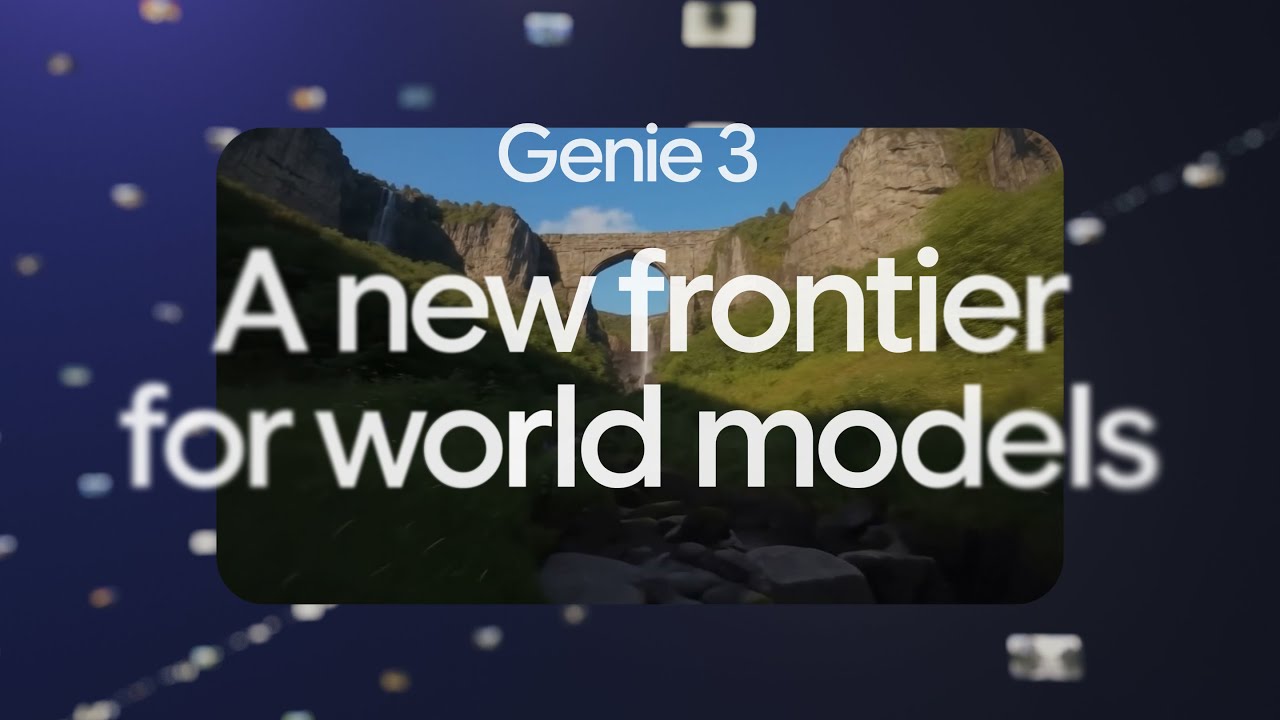
Everyone talks about Veo, Kling, and Seedance — but 2026 is also the year world models entered the conversation. These are not video generators. They are interactive simulated environments: you describe a world, then move through it frame by frame while the model predicts what you see next based on your actions. The future is not fixed at prompt time — it unfolds as you navigate.
Genie 3 — Google's consumer bet
- Announced by DeepMind (August 2025), opened via Project Genie (January 2026)
- ~11B parameters · 720p @ 24fps · spatial coherence over several minutes
- Access through Google AI Ultra (~$215/month, US only for now)
- Google leverage: Waymo simulation, Street View integration, Gemini ecosystem
Odyssey-2 Max — physics for B2B
- Autoregressive diffusion transformer with flow matching for real-time inference
- 3× parameters vs Odyssey-2 Pro · 120+ second rollouts without collapse
- VBench 2 Physics score of 58.52 — strong physical consistency claims
- Private beta for robotics, gaming, defense, and professional simulation partners
Do they replace campaign production?
No — not today. World models do not replace image, video, or audio workflows for brand campaigns. They open a fifth category: interactive simulation for training, prototyping, and exploration. For Bellucci Studio clients, the near-term relevance is understanding the landscape — especially for automotive (Waymo × Genie), immersive retail, and game prototyping — not swapping out Seedance or FLUX pipelines.
The real question is not which is the better video model. It is which company wins distribution versus physics fidelity — and both are still early stage.