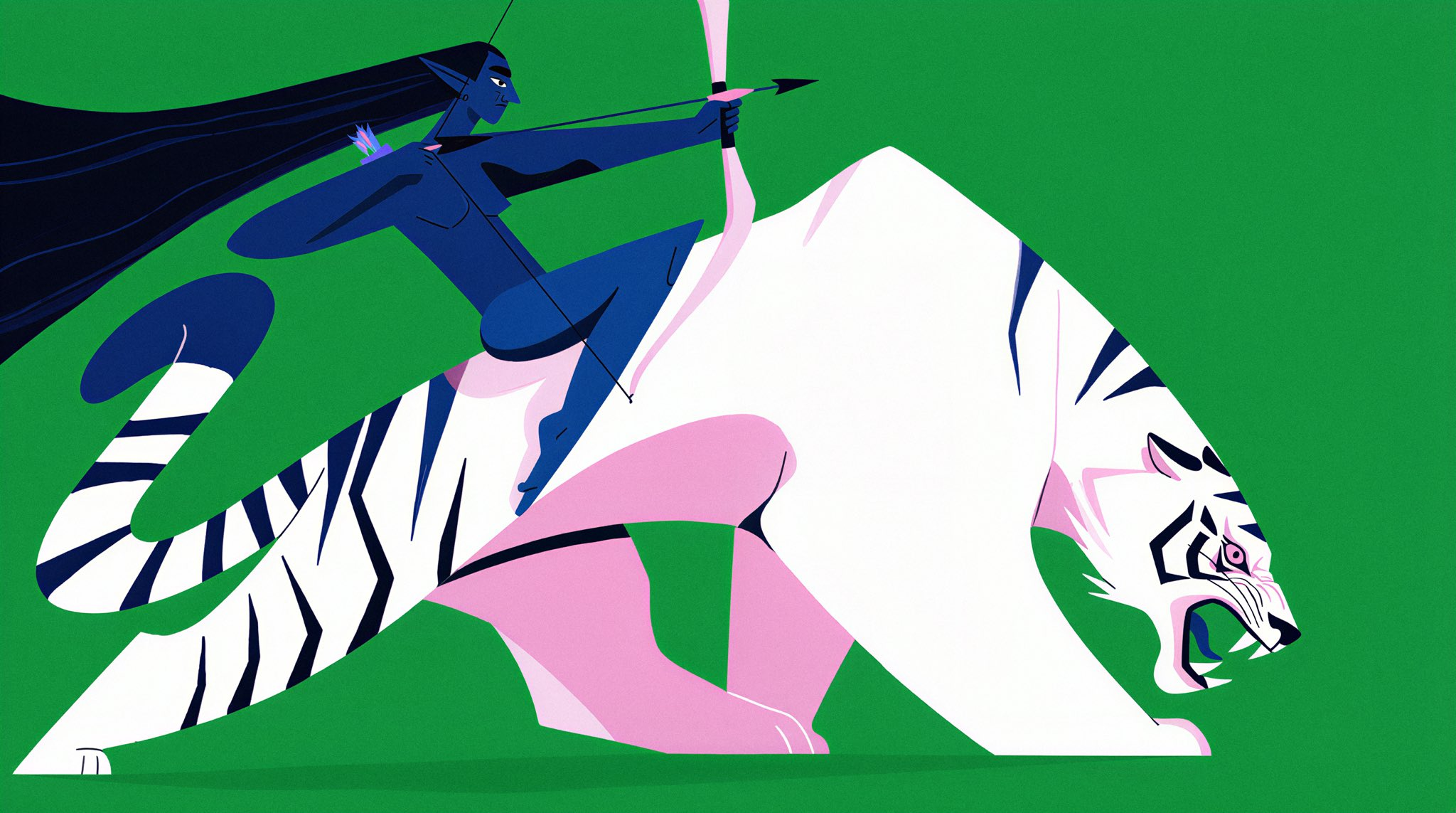
KREA released KREA 2 (K2) — an image model positioned differently from GPT-Image-2 or Nano Banana. It is not optimized for precise placement, text rendering, or complex spatial instructions. It is built to produce visually desirable, cinematic, editorial-grade frames fast — often in 20–30 seconds per generation.
Where K2 fits in a video pipeline
The clearest use case: generate a strong cinematic still with K2, then animate it in Seedance 2.0 for movement. K2 creates the visual matter; Seedance adds motion. This mirrors how Bellucci Studio approaches campaign films — lock the frame aesthetic first, then direct motion with purpose.
Test prompt and results
We tested: "cinematic black obsidian castle from far, cold foggy snowy atmosphere, a mad man on his knees laughing face to the sky like if he was possessed." Output was moody, compositionally strong, and immediately usable as a film frame — faster than comparable GPT-Image-2 runs on long prompts.
Strengths
- Fast generation (~20–30 seconds) with strong cinematic and surreal aesthetics
- Clean composition, worked lighting, editorial feel out of the box
- Excellent as a visual starting point before video animation
Current limits
- Native resolution relies on upscaling — output can look soft or abstract without post
- No image-to-image editing yet (KREA 2 Edit announced)
- Weak text rendering and irregular faces, textures, and architectural detail
- Below GPT-Image-2 for precise placement and structured layouts
Verdict for studios
K2 is not the most controllable image model — but for one job it excels: film-like frames without heavy prompt engineering. Pair with Seedance for premium AI video.
K2 is not the most controllable image model — but for one specific job, it excels: generating film-like frames without heavy prompt engineering or dozens of iterations. Pair it with Seedance for premium AI video sequences. Watch for KREA 2 Edit — that could close the gap on the biggest current limitation.